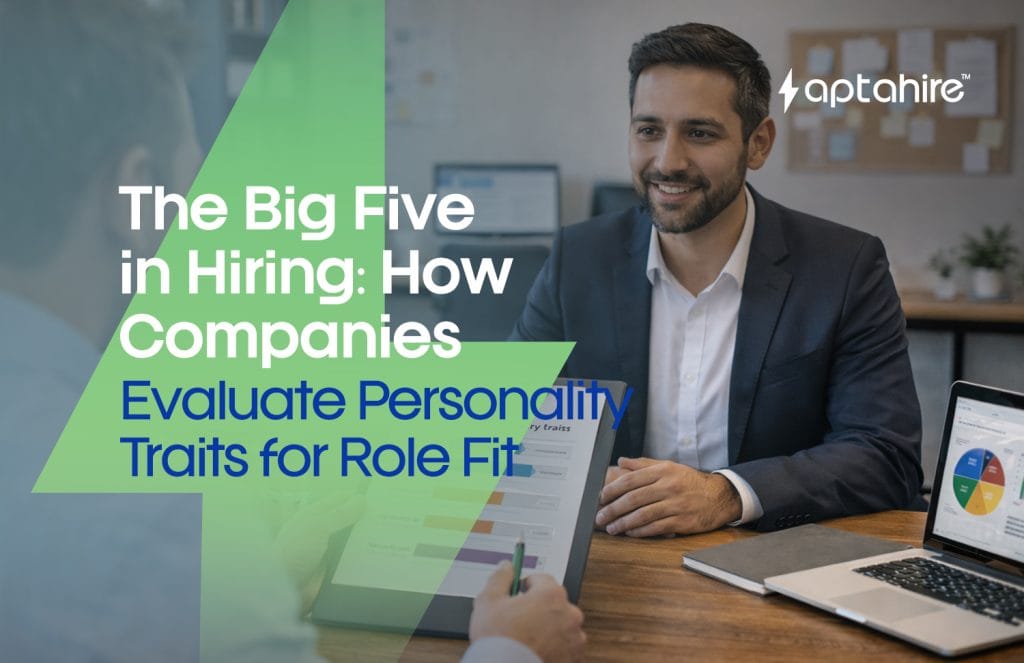
The Big Five in Hiring: How Companies Evaluate Personality Traits for Role Fit
When most people think of job interviews, they imagine resumes, technical questions, and maybe a case study. But modern hiring is shifting focus from what you’ve done to who you are at work.
This is where the Big Five personality traits come in. Instead of hiring purely on skills, companies now ask a deeper question: does this candidate naturally fit the role, the team, and the culture?
The Science Behind the Big Five Personality Traits
The Big Five model, also known as OCEAN, is considered the gold standard in personality psychology. Developed over decades of research, it has been validated across cultures, industries, and age groups.
The five core traits include:
- Openness to Experience: Creativity, curiosity, adaptability
- Conscientiousness: Organization, discipline, reliability
- Extraversion: Sociability, energy, assertiveness
- Agreeableness: Empathy, cooperation, teamwork
- Neuroticism (Emotional Stability): Stress management and emotional resilience
Unlike rigid personality typing systems, the Big Five measures traits on a spectrum, making it far more nuanced and predictive of workplace behavior.
Why Employers Use the Big Five in Hiring
Organizations want employees who perform consistently, adapt to challenges, collaborate effectively, and stay longer. Personality plays a major role in all of these outcomes.
- Meta-analyses show conscientiousness is the strongest predictor of job performance across roles
- Extraversion correlates strongly with success in sales and leadership
- Low neuroticism predicts resilience in high-stress professions
- SHL research shows a 20–25% increase in performance when personality data is used in hiring
This makes the Big Five a practical, data-backed tool rather than just theory.
Mapping Big Five Traits to Job Roles
Openness to Experience
High openness suits creative and innovation-driven roles like marketing, design, or R&D. Lower openness may be beneficial in compliance or auditing roles that require strict rule adherence.
Conscientiousness
Critical for roles such as project management, engineering, or healthcare, where precision and reliability are non-negotiable.
Extraversion
High extraversion benefits sales, leadership, and client-facing roles, while analytical or research roles may suit lower or moderate levels.
Agreeableness
Valuable in HR, education, and healthcare roles where empathy and collaboration matter. Balance is key too much may lead to avoidance of tough decisions.
Neuroticism / Emotional Stability
Low neuroticism is essential in high-pressure environments such as aviation, emergency medicine, and law enforcement.
There are no good or bad traits only better fits for specific roles.
How Companies Measure the Big Five
Employers use scientifically validated assessments to measure personality traits accurately.
Candidates typically respond to statements such as:
- “I double-check my work for errors.”
- “I enjoy exploring new ideas and experiences.”
- “I feel comfortable leading group discussions.”
- “I avoid confrontations when possible.”
Responses generate a personality profile that recruiters compare against job and culture requirements.
Benefits of Using the Big Five in Hiring
- Better role fit: Higher engagement and productivity
- Improved retention: Reduced turnover from misaligned hires
- Stronger teams: Balanced personalities improve collaboration
- Bias reduction: Focuses on behavior, not background
- Leadership identification: Supports succession planning
What This Means for Candidates
Job seekers don’t need to game personality tests. Employers aren’t looking for a single ideal personality they’re looking for fit.
Understanding your own Big Five profile helps you:
- Target roles where you’ll naturally thrive
- Frame your strengths clearly in interviews
- Identify growth areas for long-term career development
Personality alignment leads to better performance and greater job satisfaction.
Who Uses the Big Five?
- Google uses personality data for team-building and innovation
- Unilever applies it in graduate hiring and leadership identification
- Healthcare organizations assess empathy and emotional stability
According to Deloitte, 62% of Fortune 500 companies now use personality assessments like the Big Five in hiring.
Final Thoughts
Hiring today is about finding people who will thrive, adapt, and grow not just perform tasks.
The Big Five provides a science-backed framework that helps employers make smarter hiring decisions and helps candidates find roles aligned with their natural strengths.
When personality and role fit align, teams collaborate better, employees stay longer, and companies perform stronger.
FAQs:
1. What are the Big Five personality traits?
They are Openness, Conscientiousness, Extraversion, Agreeableness, and Neuroticism (Emotional Stability).
2. Why do employers use the Big Five?
Because personality predicts teamwork, adaptability, stress management, and long-term performance.
3. Which trait matters most for job performance?
Conscientiousness is the strongest predictor across most roles.
4. Are there ideal personality traits for all jobs?
No. Different roles require different personality balances.
5. Can someone fail a Big Five test?
No. There are no right or wrong results only role alignment.
6. How are Big Five traits measured?
Through validated self-report questionnaires scored across five spectrums.
7. Is the Big Five better than MBTI?
Yes. It’s more reliable, flexible, and predictive of job performance.
8. Can candidates prepare for Big Five assessments?
The best approach is to answer honestly rather than trying to game the results.
9. Is the Big Five used alone in hiring?
No. It’s combined with interviews, skills tests, and cognitive assessments.
10. How can knowing my Big Five traits help my career?
It helps you choose roles where your natural tendencies support long-term success.

SEO ANALYST