The Role of DEI in Talent Acquisition: Moving Beyond the Buzzwords
DEI in Talent Acquisition: Moving Beyond Buzzwords
Let’s be honest Diversity, Equity, and Inclusion (DEI) has become one of the most talked-about topics in hiring. Almost every company mentions it on their careers page. But here’s the real question: are organizations truly practicing DEI in talent acquisition, or is it just another corporate buzzword?
In today’s competitive job market, candidates are not only looking for salary and benefits. They want workplaces where they feel respected, valued, and given equal opportunities to grow. DEI in talent acquisition is no longer optional. It is a strategic necessity. Companies that genuinely embed DEI into their hiring process do not just build diverse teams they build stronger, more innovative, and future-ready organizations.
Moving beyond buzzwords means turning intent into measurable action. It requires designing recruitment systems that reduce bias, widen access, and create equal pathways for talent from all backgrounds.
1. Understanding DEI in Talent Acquisition
Before implementing DEI strategies, organizations must clearly define what each component means within the hiring context.
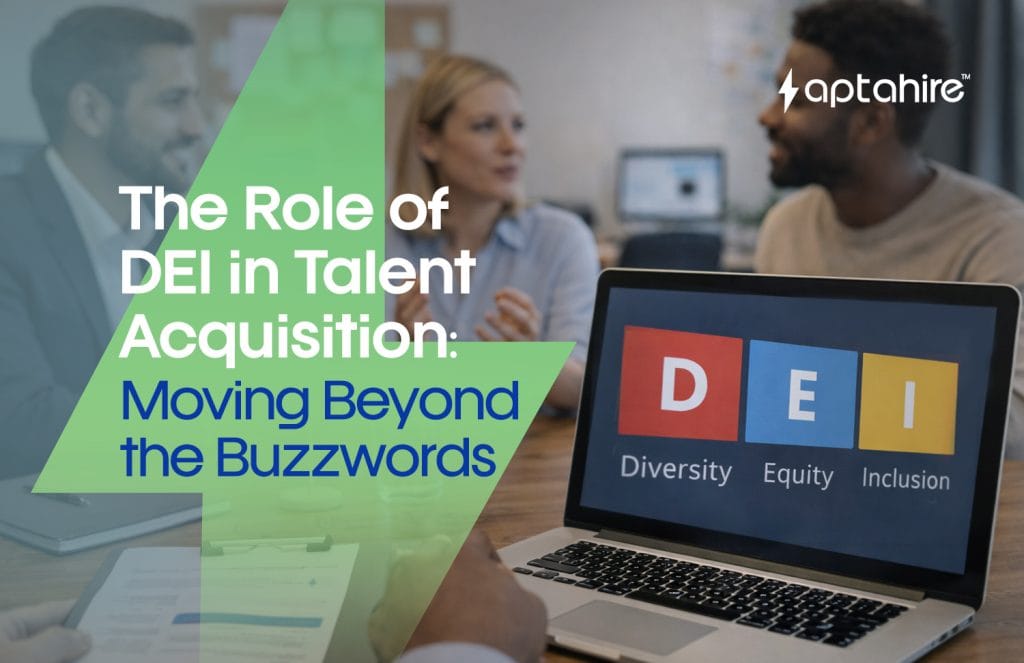
- Diversity: Representation of individuals from varied backgrounds, cultures, genders, abilities, ages, and experiences.
- Equity: Fair processes that acknowledge candidates may start from different circumstances and require tailored support.
- Inclusion: Creating an environment where diverse hires feel welcomed, heard, and empowered to contribute.
DEI in recruitment goes beyond increasing representation numbers. It involves redesigning job descriptions, sourcing strategies, interview processes, and evaluation systems to eliminate systemic barriers.
- Are job descriptions written in gender-neutral language?
- Are hiring panels diverse?
- Are evaluation criteria standardized?
True DEI integration begins at the very first touchpoint a candidate has with the organization.
2. Eliminating Bias from the Recruitment Process
Unconscious bias remains one of the biggest obstacles to fair hiring. Even well-intentioned recruiters can unknowingly favor candidates with similar backgrounds or communication styles.
Practical Solutions
- Structured Interviews: Ask every candidate the same role-relevant questions and evaluate them using predefined criteria.
- Blind Resume Screening: Remove names, photos, and other identifiers to focus solely on skills and experience.
- Standardized Evaluation Rubrics: Implement clear scoring systems to ensure evidence-based decisions.
Bias awareness training is important but systems must also be structurally designed to minimize bias. When fairness is embedded into the process, hiring decisions become more objective and defensible.
3. Expanding and Diversifying Talent Pipelines
If organizations continue sourcing talent from the same limited channels, results will not change. Meaningful diversity requires proactive outreach.
- Partner with universities serving underrepresented communities
- Collaborate with community organizations and professional networks
- Leverage inclusive job boards and digital platforms
- Develop internship and mentorship programs targeting marginalized groups
Employee referral programs should also be reviewed carefully. While effective, they can unintentionally reinforce homogeneity if not balanced with diverse sourcing strategies.
A proactive pipeline strategy ensures that diverse talent is actively sought not passively expected.
4. Creating Inclusive Candidate Experiences
DEI does not end with sourcing. The candidate experience is central to inclusion.
From the first email to the final offer, candidates assess whether they feel respected and valued. Small details can make a significant impact:
- Clear and timely communication
- Accessibility accommodations for candidates with disabilities
- Flexible interview formats when needed
- Transparent timelines and constructive feedback
Representation during interviews also matters. When candidates see diverse interview panels, they are more likely to envision themselves thriving within the organization.
Inclusion must be visible, consistent, and authentic not performative.
5. Measuring, Tracking, and Holding Leadership Accountable
You cannot improve what you do not measure. Many companies speak about DEI goals but fail to track meaningful metrics.
Key Metrics to Monitor
- Diversity representation at each hiring stage
- Offer acceptance rates across demographic groups
- Time-to-hire comparisons
- Retention and promotion trends
All data collection must align with privacy laws and ethical standards.
Most importantly, DEI must extend beyond HR. Senior leadership must actively support and champion these efforts. When DEI goals are tied to performance evaluations and organizational KPIs, they become embedded in business strategy.
Sustainable change requires long-term commitment and executive ownership.
Conclusion
DEI in talent acquisition is not about checking boxes or publishing polished statements. It is about rethinking systems, challenging assumptions, and committing to fairness at every stage of hiring.
Organizations that move beyond buzzwords understand that diversity drives innovation, equity builds trust, and inclusion fuels performance. When DEI becomes embedded in recruitment processes from sourcing to selection to onboarding companies build teams that reflect the communities they serve.
The future of talent acquisition belongs to organizations that recognize that inclusive hiring is not just morally right it is strategically smart.
DEI works best when it is built into the system, not just written into the mission statement.
FAQs:
1. What does DEI mean in talent acquisition?
DEI in talent acquisition refers to designing hiring processes that promote diversity, ensure fairness, and create inclusive experiences for all candidates.
2. Why is DEI important in recruitment?
DEI expands talent pools, enhances innovation, improves employee engagement, and strengthens employer branding.
3. How can companies reduce bias in hiring?
Through structured interviews, blind resume screening, standardized evaluation criteria, and bias training for hiring teams.
4. Is diversity hiring the same as quota hiring?
No. Diversity hiring focuses on removing systemic barriers and expanding access to opportunities, while quota hiring emphasizes numerical targets without addressing fairness.
5. How can organizations measure DEI success?
By tracking diversity metrics, hiring stage conversion rates, retention data, employee feedback, and leadership accountability indicators.

Product and Marketing Manager