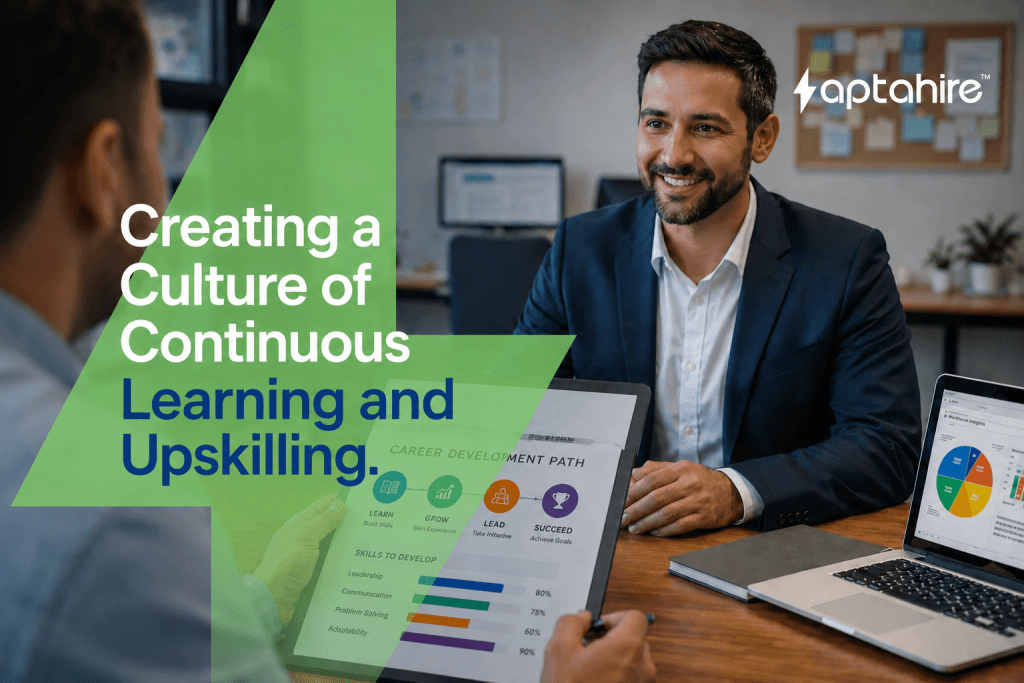
Creating a Culture of Continuous Learning and Upskilling
Introduction:
The workplace is evolving faster than ever. New technologies, changing business models, and shifting customer expectations are constantly redefining the skills employees need to succeed. In this environment, organizations can no longer rely solely on existing knowledge or traditional training methods.
Continuous learning and upskilling have become essential for both organizational growth and employee development. Employees today want opportunities to learn, grow, and stay relevant in their careers. At the same time, organizations need agile and future-ready teams that can adapt to changing market demands.
Creating a culture of continuous learning is not just about offering training programs. It is about embedding learning into the everyday work experience and encouraging employees to see growth as an ongoing journey.
Human Resources plays a critical role in building this culture by designing learning strategies, enabling skill development, and fostering an environment where curiosity and improvement are encouraged.
This article explores how organizations can create a strong culture of continuous learning and upskilling.
1. Building a Learning-First Mindset Across the Organization
A culture of learning starts with mindset. Employees should feel that learning is valued, encouraged, and supported at every level of the organization.
HR and leadership teams can promote this mindset by:
- Encouraging curiosity and experimentation
- Recognizing employees who actively learn and improve
- Positioning learning as part of career growth rather than a separate activity
Leaders play an important role in setting the example. When managers actively participate in learning programs and share their own development journeys, employees are more likely to adopt similar behaviors.
Learning should be seen as a continuous process rather than something limited to onboarding or annual training sessions.
2. Identifying Skill Gaps and Future Workforce Needs
To create effective upskilling strategies, organizations must first understand the skills their workforce currently has and the skills they will need in the future.
HR teams can use assessments, performance reviews, and workforce analytics to identify:
- Existing skill gaps
- Emerging industry trends
- Future role requirements
- Areas requiring reskilling or specialization
This data-driven approach helps organizations create targeted learning initiatives instead of generic training programs.
By aligning learning strategies with business goals, organizations ensure that employees develop skills that are both personally valuable and strategically important.
3. Providing Accessible and Flexible Learning Opportunities
Modern employees prefer learning experiences that are flexible, practical, and easy to access. Traditional classroom-based training alone is no longer sufficient.
Organizations can support continuous learning through:
- Online learning platforms and digital courses
- Microlearning modules
- Workshops and certification programs
- Cross-functional projects and job rotations
Flexible learning options allow employees to learn at their own pace while balancing work responsibilities.
Technology also plays a major role in making learning more personalized and scalable across the organization.
4. Encouraging Knowledge Sharing and Collaboration
Continuous learning becomes more effective when employees learn from one another. Organizations should create opportunities for collaboration and knowledge exchange.
HR can encourage this through:
- Mentorship and coaching programs
- Peer learning sessions
- Internal webinars and workshops
- Collaborative problem-solving initiatives
Knowledge sharing strengthens teamwork and helps employees gain practical insights from real experiences.
It also creates a culture where learning is integrated into everyday interactions rather than treated as a formal process alone.
5. Linking Learning to Career Growth and Recognition
Employees are more motivated to learn when they see clear connections between skill development and career advancement.
HR teams should ensure that learning contributes to:
- Promotion opportunities
- Leadership development pathways
- Performance evaluations
- Recognition and rewards
Career progression frameworks can highlight which skills are needed for future roles and how employees can prepare for advancement.
Recognizing learning achievements reinforces the importance of development and encourages long-term engagement with upskilling initiatives.
Conclusion
Creating a culture of continuous learning and upskilling is essential for organizations that want to remain competitive in a rapidly changing world.
By promoting a learning-first mindset, identifying skill gaps, providing accessible learning opportunities, encouraging collaboration, and linking development to career growth, organizations can build a workforce that is adaptable, skilled, and future-ready.
Continuous learning benefits both employees and businesses. Employees gain confidence, career growth, and relevance, while organizations improve innovation, agility, and long-term performance.
Companies that invest in learning today are preparing their workforce for the challenges and opportunities of tomorrow.
FAQs
1. What is continuous learning in the workplace?
Continuous learning refers to the ongoing process of developing new skills and knowledge throughout an employee’s career.
2. Why is upskilling important for organizations?
Upskilling helps employees stay relevant, improves productivity, and prepares organizations for changing business and technology demands.
3. How can HR support a learning culture?
HR can provide training programs, learning platforms, mentorship opportunities, and career development frameworks.
4. What are common methods for employee upskilling?
Common methods include online courses, workshops, certifications, mentoring, job rotations, and hands-on projects.
5. How does continuous learning improve employee retention?
Employees are more likely to stay with organizations that invest in their growth and provide opportunities for career advancement.

HR Domain Specialized Content Writer